
The Ultimate Guide to Starting a Pharmaceutical Regulatory Affairs Career in 2026
Introduction
The pharmaceutical industry is growing faster than ever. New medicines, medical devices, biologics, and healthcare technologies are entering the market every year. Behind every approved drug is a team of professionals who ensure that products meet government regulations and safety standards. This is where a Pharmaceutical Regulatory Affairs Career becomes important.
In 2026, regulatory affairs professionals will continue to be in high demand across pharmaceutical companies, biotechnology firms, medical device manufacturers, and healthcare organizations. If you are a pharmacy, life sciences, biotechnology, or healthcare graduate, this field offers excellent career opportunities, job stability, and global exposure.
This guide explains everything you need to know about building a successful Pharmaceutical Regulatory Affairs Career in 2026.
What is Pharmaceutical Regulatory Affairs?
Pharmaceutical Regulatory Affairs is a specialized field that ensures pharmaceutical products comply with national and international regulations before they reach patients.
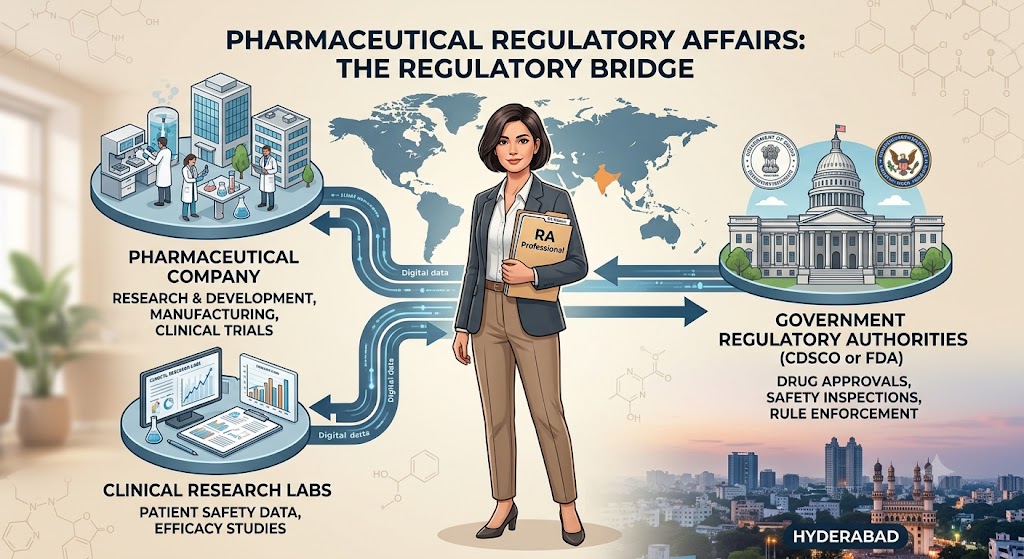
Regulatory Affairs professionals work as a bridge between pharmaceutical companies and regulatory authorities. Their main responsibility is to ensure that drugs, vaccines, medical devices, and healthcare products meet all legal and scientific requirements.
They prepare and submit documents to regulatory agencies such as:
- US FDA (United States Food and Drug Administration)
- EMA (European Medicines Agency)
- MHRA (United Kingdom)
- CDSCO (India)
- TGA (Australia)
- Health Canada
Without regulatory approval, a pharmaceutical product cannot be legally marketed or sold.
Why Choose a Pharmaceutical Regulatory Affairs Career in 2026?
The healthcare sector is expanding globally. Governments are strengthening regulations to ensure patient safety and product quality.
Here are some reasons why a Pharmaceutical Regulatory Affairs Career is becoming increasingly popular:
Growing Demand
Pharmaceutical companies require skilled regulatory professionals to manage product registrations and approvals.
Global Career Opportunities
Regulatory Affairs professionals can work with multinational pharmaceutical companies and regulatory agencies worldwide.
Attractive Salary Packages
The demand for qualified professionals often results in competitive salaries and excellent career growth.
Diverse Work Environment
Professionals collaborate with researchers, quality assurance teams, manufacturing experts, and government agencies.
Long-Term Career Stability
Healthcare and pharmaceutical industries remain essential regardless of economic conditions.
Educational Requirements for Regulatory Affairs
A strong educational background is important for entering the regulatory affairs field.
Suitable qualifications include:
- B.Pharm
- M.Pharm
- Pharm.D
- B.Sc Life Sciences
- M.Sc Biotechnology
- M.Sc Microbiology
- B.Tech Biotechnology
- MBBS
- Life Science-related degrees
Additional certifications in Regulatory Affairs can significantly improve employability.
Essential Skills Needed for a Pharmaceutical Regulatory Affairs Career
Success in regulatory affairs requires a combination of scientific knowledge and professional skills.
Regulatory Knowledge
Understanding pharmaceutical regulations and guidelines is essential.
Documentation Skills
Professionals prepare detailed regulatory submissions and technical documents.
Communication Skills
Effective communication with regulatory agencies and internal teams is critical.
Attention to Detail
Small errors in submissions can delay product approvals.
Analytical Thinking
Regulatory professionals must interpret regulations and apply them correctly.
Project Management
Managing multiple product submissions requires strong organizational skills.
Key Responsibilities of a Regulatory Affairs Professional
A Pharmaceutical Regulatory Affairs Career involves a variety of responsibilities.
These may include:
- Preparing regulatory submissions
- Managing product registrations
- Reviewing labeling and packaging compliance
- Coordinating with health authorities
- Maintaining regulatory databases
- Monitoring regulatory changes
- Supporting product lifecycle management
- Ensuring compliance with international standards
The exact responsibilities depend on the organization and job level.
Popular Job Roles in Regulatory Affairs
Several career paths are available within regulatory affairs.
Regulatory Affairs Associate
Entry-level position responsible for documentation and regulatory support activities.
Regulatory Affairs Executive
Handles product submissions and communication with regulatory authorities.
Regulatory Affairs Specialist
Provides expertise in regulatory strategy and compliance management.
Regulatory Affairs Manager
Leads regulatory projects and manages teams.
Regulatory Affairs Director
Develops regulatory strategies at the organizational level.
Global Regulatory Affairs Manager
Manages international product approvals and regulatory operations.
Best Certifications for Regulatory Affairs in 2026
Professional certifications can strengthen your Pharmaceutical Regulatory Affairs Career.
Popular options include:
- Regulatory Affairs Certification (RAC)
- Diploma in Regulatory Affairs
- Post Graduate Diploma in Clinical Research and Regulatory Affairs
- Good Manufacturing Practices (GMP) Certification
- ICH Guidelines Training
- Pharmacovigilance and Regulatory Affairs Programs
These certifications help candidates gain practical regulatory knowledge.
Pharmaceutical Regulatory Affairs Career Salary in 2026
Salaries vary based on education, location, experience, and company size.
Entry-Level Professionals
Fresh graduates can expect competitive starting salaries depending on the region and employer.
Mid-Level Professionals
Professionals with 3–7 years of experience often receive significantly higher compensation.
Senior-Level Professionals
Managers and directors can earn attractive salary packages along with performance incentives.
Global pharmaceutical companies generally offer higher salary ranges and additional benefits.
How to Start Your Regulatory Affairs Career
If you want to build a successful Pharmaceutical Regulatory Affairs Career, follow these steps:
Step 1: Complete Relevant Education
Obtain a degree in pharmacy, biotechnology, life sciences, or a related field.
Step 2: Learn Regulatory Guidelines
Study FDA, EMA, ICH, and CDSCO regulations.
Step 3: Earn Certifications
Complete specialized regulatory affairs training programs.
Step 4: Gain Practical Experience
Apply for internships and entry-level regulatory positions.
Step 5: Build Professional Networks
Join industry associations and attend pharmaceutical conferences.
Step 6: Stay Updated
Regulations evolve frequently. Continuous learning is essential.
Future Scope of Regulatory Affairs
The future looks promising for regulatory professionals.
Several factors are driving demand:
- Growth of biotechnology products
- Expansion of pharmaceutical manufacturing
- Increasing global regulatory requirements
- Rising demand for medical devices
- Growth of digital healthcare solutions
- Development of personalized medicine
As healthcare regulations become more complex, the need for qualified regulatory experts will continue to increase.
Challenges in Regulatory Affairs
Like any profession, regulatory affairs has its challenges.
Common challenges include:
- Constantly changing regulations
- Tight submission deadlines
- Complex international requirements
- High documentation standards
- Managing multiple projects simultaneously
However, professionals who enjoy problem-solving and continuous learning often find the field highly rewarding.
Tips for Success in Pharmaceutical Regulatory Affairs
To excel in this profession:
- Develop strong scientific knowledge
- Improve technical writing skills
- Learn global regulatory frameworks
- Stay informed about industry updates
- Build professional relationships
- Gain hands-on experience whenever possible
- Focus on accuracy and compliance
These habits can help accelerate career growth.
Conclusion
A Pharmaceutical Regulatory Affairs Career offers excellent opportunities for pharmacy and life science graduates in 2026. The profession combines science, law, documentation, and healthcare to ensure that safe and effective products reach patients.
With increasing global regulations and rapid pharmaceutical innovation, skilled regulatory affairs professionals will remain highly valuable. By developing the right knowledge, certifications, and practical experience, you can build a stable, rewarding, and future-focused career in this growing field.
If you are looking for a healthcare profession with strong demand, international opportunities, and long-term career growth, Pharmaceutical Regulatory Affairs may be the perfect choice.
Join Whatsapp Group for daily Job Notification Join In below Group
https://whatsapp.com/channel/0029Vb7ItFeKQuJLX55H8x1z
https://chat.whatsapp.com/LtAGZg1aswMHZoiZ8dUVvX
To Join Telegram Channel Click Below Link