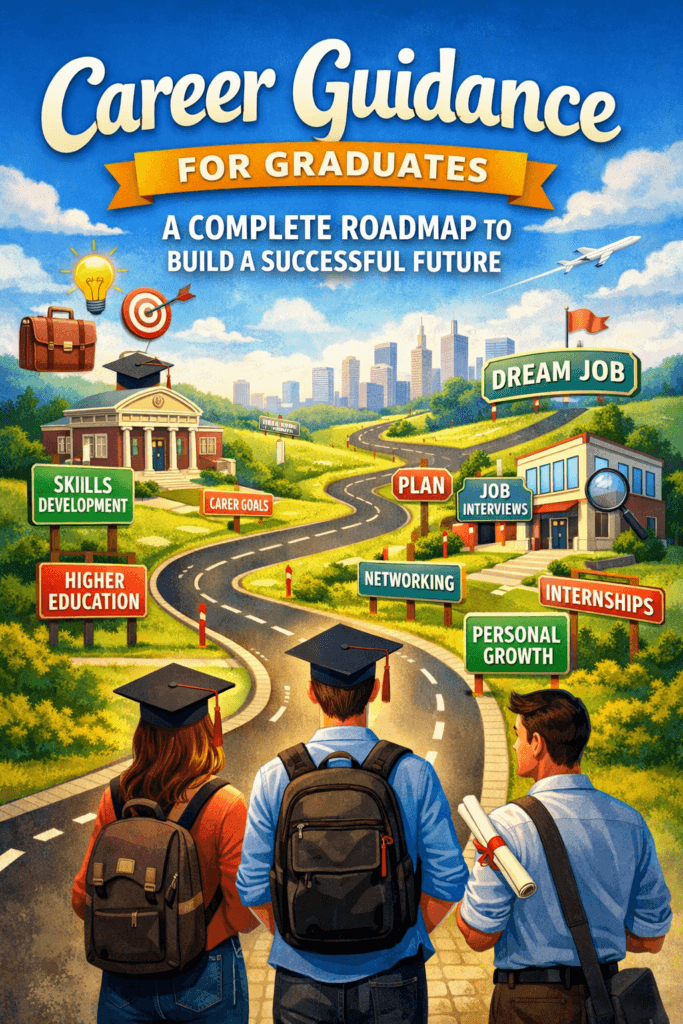
Career Guidance for Graduates: A Complete Roadmap to Build a Successful Future
Graduating from college is an exciting milestone, but it also marks the beginning of one of life’s most important journeys—building a career. Many graduates find themselves asking the same questions: What should I do next? Which career path is right for me? How do I stand out in a competitive job market?
The transition from student life to professional life can feel overwhelming. However, with the right career guidance for graduates, strategic planning, and self-awareness, you can transform uncertainty into opportunity.
In this comprehensive guide, we will explore practical strategies, essential skills, career planning techniques, and modern job market insights to help graduates confidently start their professional journey.
Why Career Guidance for Graduates Is Important
Many graduates leave college with academic knowledge but lack clear direction about their careers. This is where career guidance becomes crucial.
Career guidance helps graduates:
Understand their strengths, interests, and skills
Explore different career opportunities
Set clear professional goals
Make informed decisions about jobs, further studies, or entrepreneurship
Without proper guidance, graduates may choose careers that do not align with their interests or abilities, leading to dissatisfaction later.
With the right career planning, graduates can build a fulfilling and sustainable career path.
Understanding Yourself: The First Step in Career Planning
Before applying for jobs or pursuing higher education, graduates must first understand themselves.
Ask yourself these key questions:
What subjects or tasks do I enjoy the most?
What are my strongest skills?
Do I prefer working with people, data, technology, or creativity?
What kind of lifestyle do I want in the future?
Self-awareness is the foundation of career success.
You can also use tools like:
Personality assessments
Career aptitude tests
Skill analysis frameworks
These tools help identify careers that match your natural strengths and interests.
Exploring Career Options After Graduation
One of the biggest advantages graduates have today is variety. Unlike earlier generations, today’s graduates can explore multiple career paths.
Here are some of the most popular options.
1. Getting a Job
The most common path after graduation is entering the workforce.
Industries that regularly hire graduates include:
Information Technology
Finance and Banking
Marketing and Sales
Healthcare
Education
Media and Communication
Entry-level roles help graduates gain practical experience, which is essential for long-term career growth.
2. Pursuing Higher Education
Some graduates choose to specialize further through higher studies.
Popular options include:
Master’s degrees
MBA programs
Professional certifications
Research programs
Higher education can increase expertise, job opportunities, and salary potential.
However, it is important to choose courses that align with your career goals and industry demand.
3. Entrepreneurship
Many graduates today choose to start their own businesses instead of working for someone else.
Entrepreneurship allows individuals to:
Turn ideas into reality
Create jobs
Build financial independence
However, entrepreneurship also requires:
Risk-taking ability
Financial planning
Business knowledge
Persistence
Graduates interested in business should start by developing entrepreneurial skills and market understanding.
4. Freelancing and the Gig Economy
The digital economy has created new opportunities for graduates.
Freelancing careers include:
Graphic design
Content writing
Digital marketing
Web development
Video editing
Social media management
Freelancing offers:
Flexible working hours
Remote work opportunities
Global clients
Many graduates start freelancing while building experience and portfolios.
How to Identify the Right Career Path
Choosing the right career involves a combination of self-analysis, research, and experimentation.
Here are some effective strategies.
Research Industry Trends
Understanding industry trends helps graduates choose future-proof careers.
Fast-growing fields include:
Artificial Intelligence
Data Science
Cybersecurity
Renewable Energy
Healthcare Technology
Digital Marketing
Researching industries helps identify high-demand skills and career opportunities.
Gain Practical Experience
Experience is often more valuable than theoretical knowledge.
Graduates can gain experience through:
Part-time jobs
Volunteer work
Freelance projects
Practical exposure helps students understand real-world work environments.
Seek Mentorship
Mentors provide valuable insights and advice.
They can help graduates:
Avoid career mistakes
Understand industry expectations
Develop professional skills
Build networks
Mentors may include:
Professors
Industry professionals
Career counselors
Alumni networks
Essential Skills Every Graduate Should Develop
In today’s competitive job market, academic degrees alone are not enough.
Employers look for skills that add value to the workplace.
Here are some of the most important skills graduates should develop.
1. Communication Skills
Communication is one of the most important professional skills.
Graduates must be able to:
Express ideas clearly
Write professional emails
Present information confidently
Collaborate with teams
Strong communication skills improve workplace effectiveness and leadership potential.
2. Problem-Solving Skills
Employers value individuals who can analyze problems and find solutions.
Problem-solving involves:
Critical thinking
Analytical reasoning
Creativity
Decision-making
Graduates who demonstrate problem-solving ability are often seen as high-value employees.
3. Digital Skills
Technology is transforming every industry.
Graduates should develop digital competencies such as:
Basic programming
Data analysis
Digital marketing
Software proficiency
Online collaboration tools
Digital literacy significantly increases career opportunities.
4. Adaptability and Learning Mindset
Industries are constantly evolving.
Graduates must adopt a continuous learning mindset.
This includes:
Learning new technologies
Updating skills
Taking online courses
Staying informed about industry changes
Adaptability ensures long-term career success.
5. Networking Skills
Networking plays a major role in career development.
Many job opportunities come through professional connections rather than public job postings.
Graduates should:
Attend industry events
Join professional groups
Connect with professionals online
Participate in alumni networks
Strong networks can open unexpected career opportunities.
Building a Strong Resume and Personal Brand
Your resume is often the first impression employers have of you.
A strong resume should include:
Clear career objective
Relevant education
Internships and projects
Skills and certifications
Achievements
In addition to resumes, graduates should focus on personal branding.
Personal branding includes:
Professional social media presence
Online portfolio
Personal website
Thought leadership content
A strong personal brand increases visibility and credibility.
Preparing for Job Interviews
Interviews are critical moments in the hiring process.
Preparation can significantly improve success.
Key interview preparation steps include:
Researching the company
Understanding the job role
Practicing common interview questions
Preparing examples of achievements
Demonstrating confidence and enthusiasm
Employers often evaluate candidates based on attitude, communication, and cultural fit, not just technical knowledge.
Common Career Mistakes Graduates Should Avoid
Many graduates make mistakes early in their careers.
Avoid these common pitfalls:
Choosing Salary Over Learning
The first job should focus on learning and skill development, not just salary.
Experience gained early can lead to better opportunities later.
Ignoring Skill Development
Some graduates stop learning after graduation.
However, continuous learning is essential for career growth and adaptability.
Lack of Career Planning
Without a clear plan, graduates may drift from job to job without direction.
Setting short-term and long-term goals helps maintain focus.
Fear of Starting Small
Many successful professionals began in entry-level roles.
Starting small allows graduates to gain experience and understand the industry.
The Role of Internships in Career Development
Internships are one of the best ways for graduates to gain industry exposure.
Benefits of internships include:
Real-world experience
Skill development
Professional networking
Better job opportunities
Many companies hire interns as full-time employees after graduation.
Therefore, internships should be treated as serious career opportunities.
How Technology Is Changing Career Opportunities
Technology is reshaping the global job market.
New careers are emerging in areas such as:
Artificial Intelligence
Machine Learning
Blockchain
Cloud Computing
Digital Marketing
Content Creation
Graduates who develop technology-related skills will have an advantage in the modern workforce.
Career Guidance for Graduates in the Digital Age
The digital age has transformed how careers are built.
Graduates now have access to:
Online courses
Global job platforms
Remote work opportunities
Virtual internships
Professional communities
Platforms like LinkedIn, online learning websites, and professional forums allow graduates to learn, connect, and grow professionally.
Taking advantage of these resources can significantly accelerate career development.
Creating a Long-Term Career Strategy
Successful professionals rarely rely on luck.
They follow a structured career strategy.
A good career plan includes:
Short-term goals (1–2 years)
Learning skills and gaining experience.Medium-term goals (3–5 years)
Specialization and career advancement.Long-term goals (10+ years)
Leadership roles, entrepreneurship, or industry expertise.
Planning ahead helps graduates stay focused and motivated.
Conclusion
Starting a career after graduation can feel both exciting and uncertain. However, with the right career guidance for graduates, thoughtful planning, and continuous learning, the journey becomes much clearer.
Graduates should focus on understanding their strengths, exploring career options, developing essential skills, gaining practical experience, and building professional networks.
Success rarely happens overnight. Careers are built step by step through dedication, curiosity, and persistence.
By making informed decisions today and staying adaptable in a changing world, graduates can create rewarding careers that bring both professional success and personal fulfillment.
Join Whatsapp Group for daily Job Notification Join In below Group
https://whatsapp.com/channel/0029Vb7ItFeKQuJLX55H8x1z
https://chat.whatsapp.com/LtAGZg1aswMHZoiZ8dUVvX
To Join Telegram Channel Click Below Link
https://t.me/careerpathwayjobs
Job Alerts Hub –
Career Pathway – Guide to your success